
 Myanmar
 English
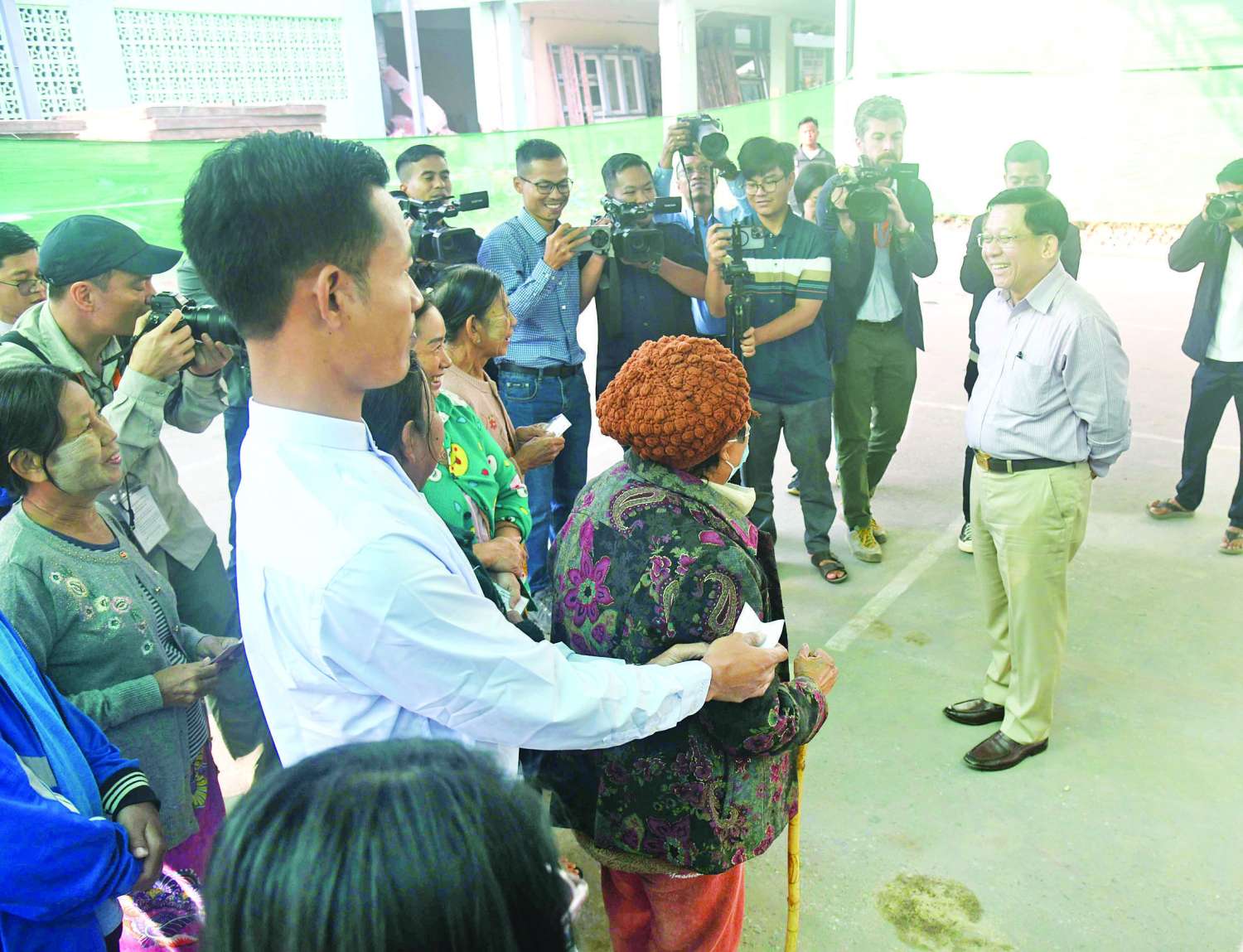
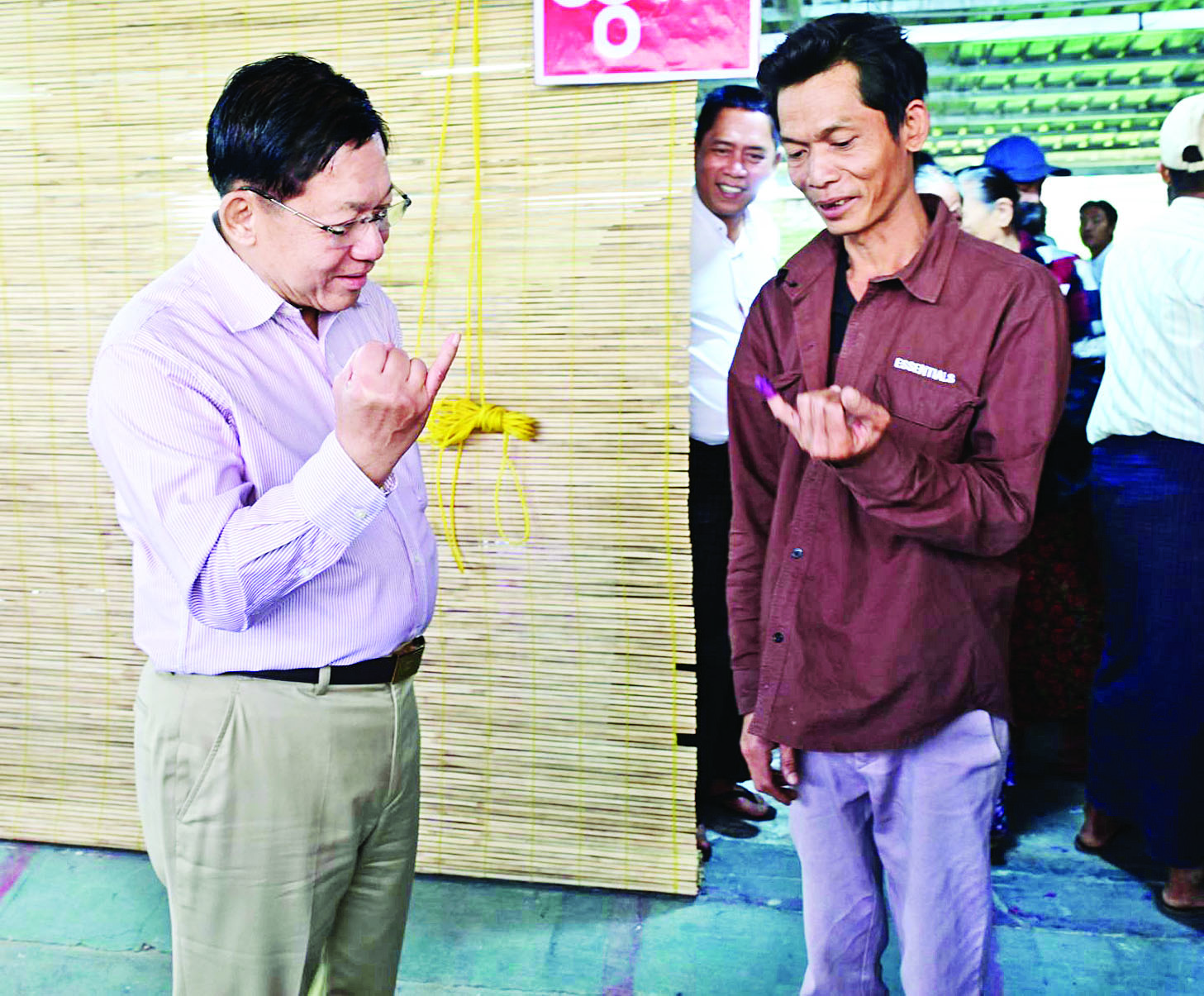
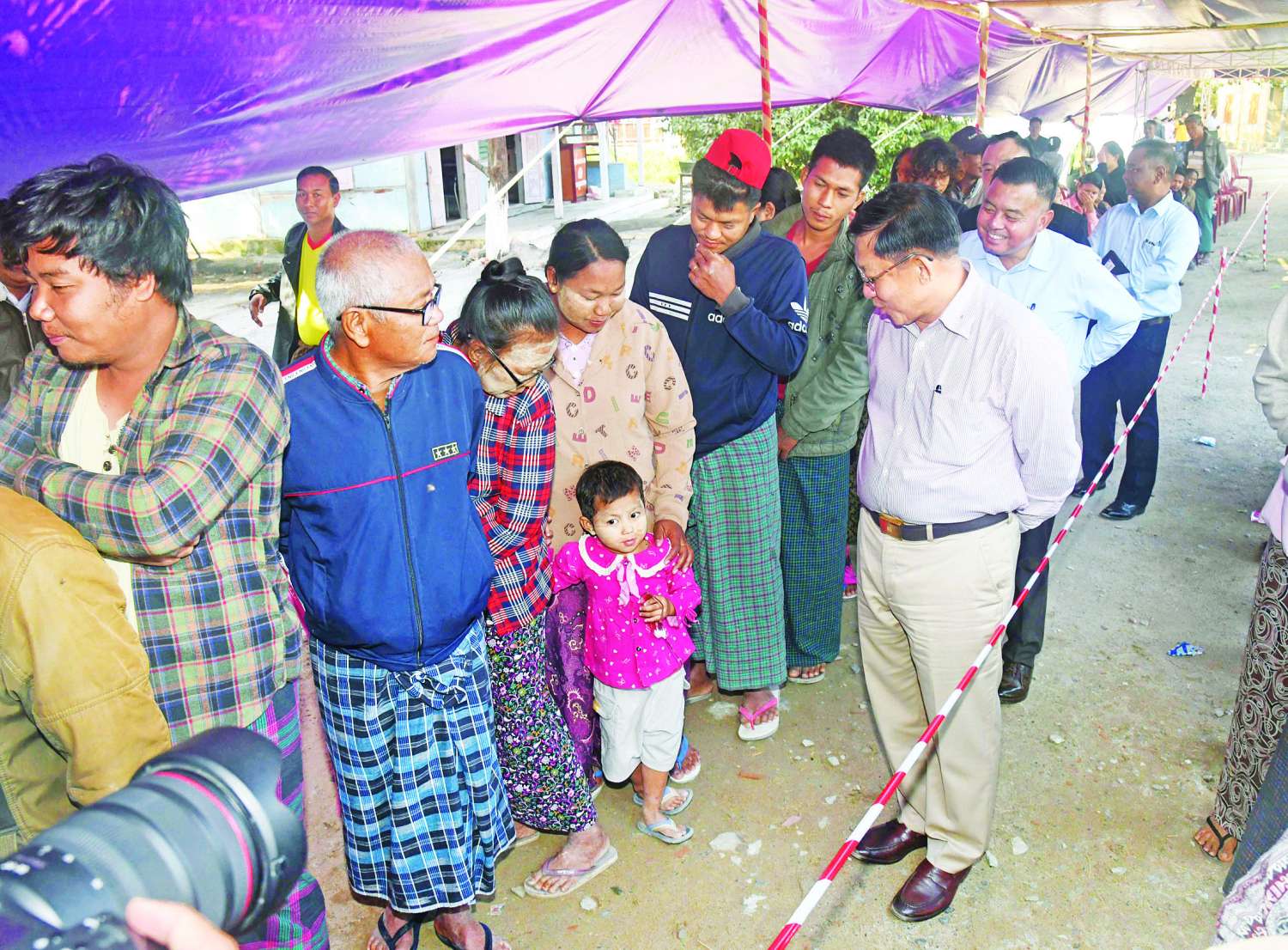
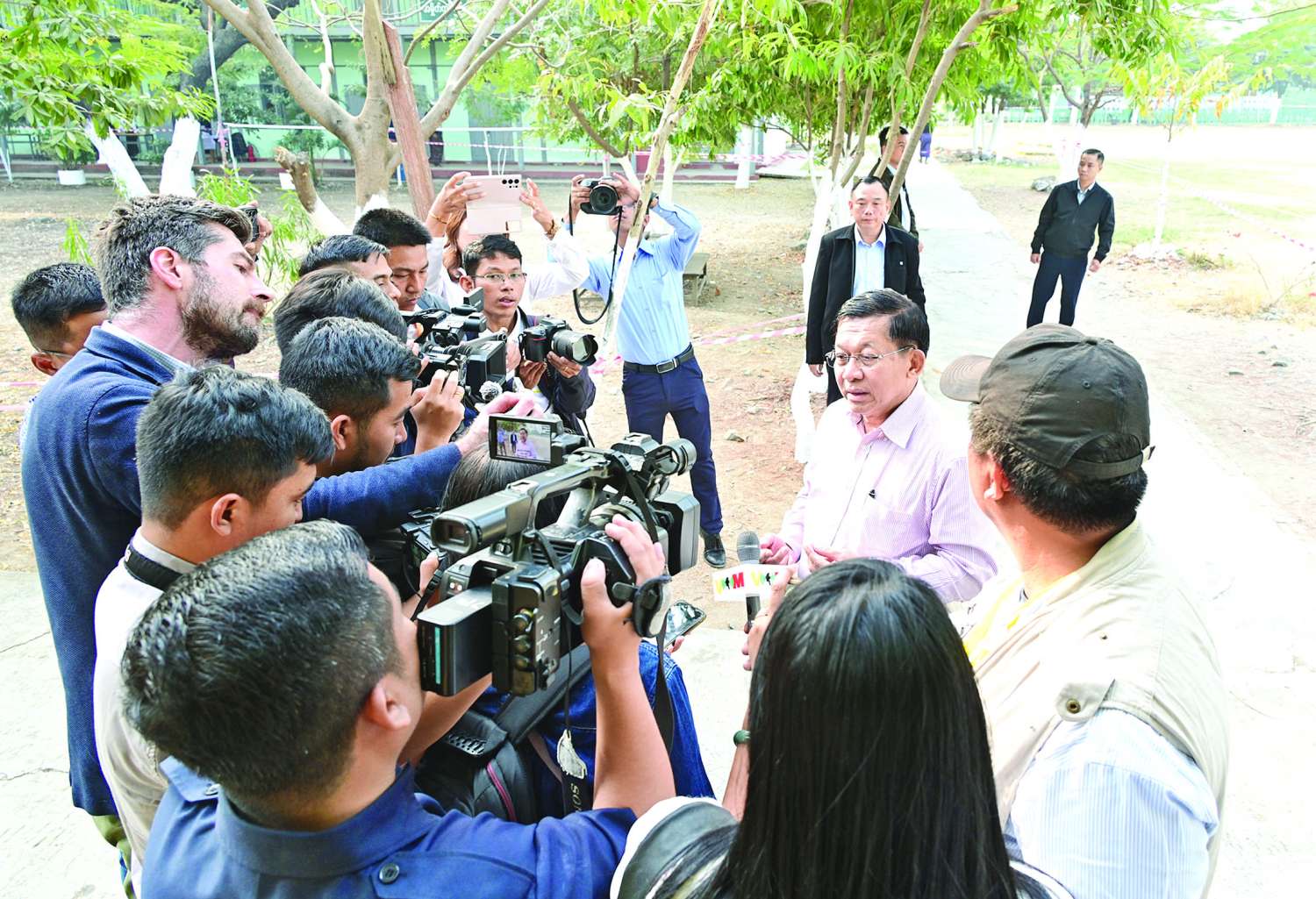
Acting President of the Republic of the Union of Myanmar and SSPC Chair Senior General Min Aung Hlaing Speaks with Voters While Touring Polling Sites
Election plays a key role in the democratic system, and voter people must exercise their right to vote – a fundamental citizen’s right – to choose and decide the future direction of the country.
Phase III of the Multiparty Democratic General Election 2025 of the Republic of the Union of Myanmar began at 6 am yesterday in the respective townships. Voting people cast their ballots energetically and orderly at their designated polling stations, exercising their free will and choice without any pressure, with pride in their country.
Acting President of the Republic of the Union of Myanmar and State Security and Peace Commission Chairman Senior General Min Aung Hlaing, accompanied by Commission Secretary General Ye Win Oo and party, visited polling stations in Mandalay Region.
During the visits, the Senior General observed actions of officials checking voter lists in the computer system and the active participation of voters in casting their ballots at the relevant polling stations in Chanmyathazi and Patheingyi townships. The Senior General cordially conversed with other people on their experiences in casting ballots, the use of MEVM and the duty serving of polling staff members.
Voters who came to cast their ballots also felt happy and honoured that the Senior General personally observed and supported the voting process. They warmly and cordially greeted the Senior General and his entourage in return. Moreover, the voters expressed that they came to cast their ballots according to their own will and shared their experiences of voting. They said that voting with the MEVM machine was easier and faster, and that the voter slips were generated exactly as they cast their votes. They cordially noted that it is impossible to manipulate or steal votes and that the entire voting process was conducted smoothly. The voters expressed the convenience of casting votes in a frank and friendly manner.
During visits to the polling stations, the Senior General responded to questions raised by local and foreign media. The full text of replies to the media is as follows: –
Q: Since today is the final day of the election, regarding this, what are your expectations for the future of Myanmar?
A: In Myanmar, we have always aimed to follow a multiparty democratic system chosen by the people. We will continue on this path. It is the path chosen by the people, not one we choose ourselves. We are part of the people, and we also support this. We will proceed according to the multiparty democratic system, and that is the path we will follow in the future.
Q: Some people are saying that the USDP, which supports Tatmadaw, will win. Because of that, some UN experts say so. There are also comments saying this should not be recognized. What would you like to say regarding this?
A: The people voting are the citizens living inside Myanmar. It’s not people from outside who are voting. The people living in Myanmar are the ones casting their votes. They can support whoever they like. Those who come to vote are supporting the candidates they want to support. If the candidates they want to support aren’t there, they won’t come to vote. There are two reasons for not voting: one is that their preferred candidates aren’t available, and the other is due to security concerns — it’s difficult for some to come because of safety. Those who do vote come because their preferred candidates are there. Among them are the people supporting parties like the USDP, other PPP, and the White Tiger Party. There are multiple parties. That’s why we publish the voter lists. Isn’t that showing that people are voting freely? Whether foreign countries recognize it or not, we don’t understand. We recognize that the people are voting. That’s the way it should be.
Q: Will the Senior General continue to be included in the next incoming government as well?
A: I can’t really say anything yet. These things depend on what methods they choose in the Hluttaw once it convenes. That’s how it is.
Q: Since it’s the last day, what would you like to say about the upcoming new government?
A: They have a responsibility to make the country better. No matter which government comes to power, the goal must be for the country to improve. A government has the duty to promote the interests of the people, to work for national development, to ensure peace and stability, and to enable the country to stand on equal footing with the rest of the world. We will do our best to achieve this. The public also needs to be involved. A government cannot lead on its own. The government can set goals and take the lead, but it cannot succeed without public participation. The government must also work to ensure that the people are involved, and the people themselves must take part. Even though we say we want to move toward democracy, it is impossible without the participation of the people. It can only succeed when the people are involved. The people are crucial.
Q: Since today is the final day and there have been many challenges, is there any message you would like to convey to the international community and to the people of Myanmar?
A: The people should work to make the country better and have a broader perspective. That’s what I want to say. The international community also needs to understand the real situation inside Myanmar. When responsible foreign officials visit Myanmar, what they hear outside and the actual situation inside the country are often different. Almost everyone says the same. What I mean is that the country is enduring all the rumours and media reports. In reality, we have many rights, and if those rights can be fully exercised, the country will progress and develop; that’s what I’m saying.
Q: Could the government that comes to power in 2025 be like the U Thein Sein government of 2010? Back in 2010, the USDP government came to power, and the people were quite satisfied with it. Can we have similar expectations for the government that will take office in 2025?
A: It will depend on the environment and circumstances in which the winning party is able to cooperate and work together, won’t it? Back when President U Thein Sein took office, they carried out their responsibilities. But on the other hand, there were also opposing forces. If those opposing forces act with the intention of making the country better, that’s one thing. However, if they act to create negative consequences instead of improving the country, then it becomes more difficult. No matter which government comes to power, this applies to any government.
Q: The challenges are different. That situation was relatively stable and orderly. But now, maintaining this current situation, which is quite volatile and tense, will be difficult. It is likely to be even more challenging.
A: The situation is not stable and tranquil. That’s correct. That’s true. We need to have a broad perspective, which is why I said earlier that the country needs a wide-ranging vision.
- Log in to post comments